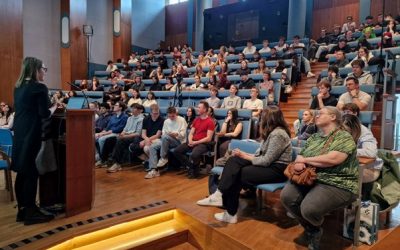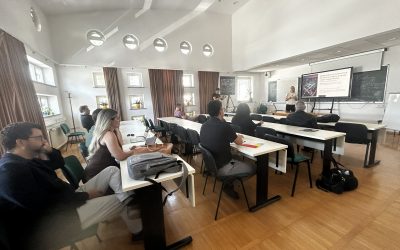
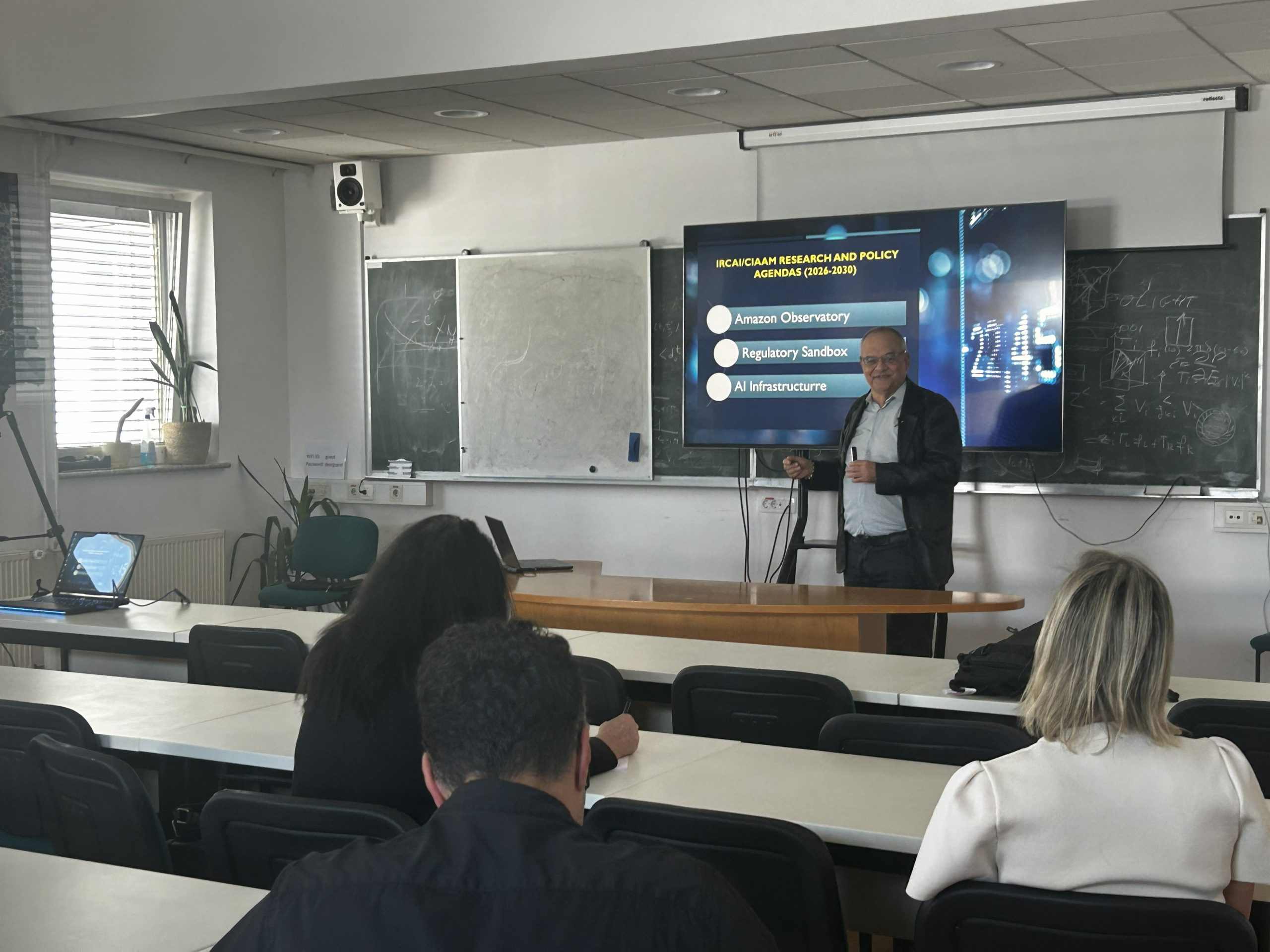
As the concluding public event of his month-long research visit to IRCAI, Prof. João Paulo Veiga from the AI Centre at the University of São Paulo (CIAAM/USP), Brazil, delivered the seminar Intersection of Artificial Intelligence, Sustainable Infrastructure, and Responsible Governance on 6 July 2026 at the Center for Information Technologies and Applied Mathematics at University of Nova Gorica (VIPAVA, Room 2.1).
Prof. Veiga’s visit, which took place between 14 June and 14 July 2026, represented another important milestone in the growing collaboration between IRCAI and Brazilian research institutions in the field of AI Infrastructure Governance. Building on IRCAI’s recent technical mission to the ELEA Data Centre in Rio de Janeiro and the Rio AI City initiative, the collaboration focused on developing an international research agenda exploring how artificial intelligence, high-performance computing (HPC), and hyperscale data centres are reshaping cities, digital sovereignty, sustainable development, and public policy.
During the seminar, Prof. Veiga presented innovative research on AI-enabled tools for assessing the environmental, regulatory, and geopolitical impacts of AI and HPC data centres. He also introduced a governance framework examining how hyperscale AI infrastructure is transforming urban development, human rights, digital sovereignty, and sustainable cities while supporting the United Nations Sustainable Development Goals (SDGs).
The seminar provided participants with valuable insights into the rapidly growing societal and policy implications of AI infrastructure. Discussions focused on responsible governance models, environmental sustainability, resilient digital ecosystems, and the need for practical governance frameworks capable of supporting trustworthy AI deployment at national and international levels.
Throughout his research stay at IRCAI, Prof. Veiga collaborated closely with researchers from the Jožef Stefan Institute and IRCAI, contributing to several strategic initiatives. His programme included research meetings within the ELIAS network, discussions on the emerging European AI Factory ecosystem, technical exchanges on European AI infrastructure and HPC facilities, collaboration with UNESCO partners and IZUM, and technical visits to regional digital infrastructure facilities, including the INSIEL Data Centre in Trieste. The visit also contributed to ongoing discussions surrounding the VEGA Supercomputer in Maribor and future AI infrastructure observatories.
The collaboration has already resulted in the preparation of two Springer Nature book chapters and two international conference papers, which will be presented in Rio de Janeiro and São Paulo in 2027. These publications examine emerging governance models for AI infrastructure, responsible development of AI-ready cities, and the environmental, economic, and geopolitical implications of the rapid expansion of AI and HPC facilities.
Prof. Veiga’s visit further strengthened IRCAI’s ongoing work on AI governance methodologies, AI solutions for the public sector, the IRCAI AI Tools Radar, the IRCAI AI Academy, and the integration of AI into UNESCO’s Open Education for a Better World (OE4BW) programme. It also reinforced IRCAI’s commitment to fostering international collaboration on responsible, trustworthy, and sustainable AI under the auspices of UNESCO.
By bringing together researchers, policymakers, students, and industry representatives, the seminar highlighted the growing importance of AI infrastructure governance as one of the defining policy challenges of the AI era. It also demonstrated the value of international scientific cooperation in developing evidence-based approaches that maximise the societal benefits of artificial intelligence while addressing its environmental, ethical, and geopolitical implications.