Africa loses nearly 4 million hectares of forest per year, the second-highest rate of deforestation in the world. M-Situ, a Kenyan startup founded by a team of AI engineers and ecologists, has developed an AI-enabled solution as an early warning system to detect environmental threats in Kenyan forests, such as illegal logging, wildfires or charcoal burning. It sends data and alerts in real-time to forest rangers, conservation organizations and communities before any irreversible damage is done. Recognized as an Outstanding project in the Top 100 2025, M-Situ is proving that AI can be a powerful tool in protecting Africa’s vulnerable forest ecosystems.
A forest under threat: the scale of Africa’s environmental crisis
Deforestation, wildfires, and illegal charcoal burning threaten habitat and biodiversity loss, let alone the livelihoods, food security, and safety of millions of people who rely on the forest resources for income in agriculture, forestry, and tourism. Traditional monitoring methods, such as manual patrols or traditional systems, are too slow and too expensive and, by the time a threat is identified, it has often already become irreversible. The scale of these problems is immense. Deforestation, wildfires, and climate change are global challenges, but their impact is most acutely felt in Africa, jeopardizing the environment, livelihoods, and well-being of millions.
Listening to the forest: how M-Situ works
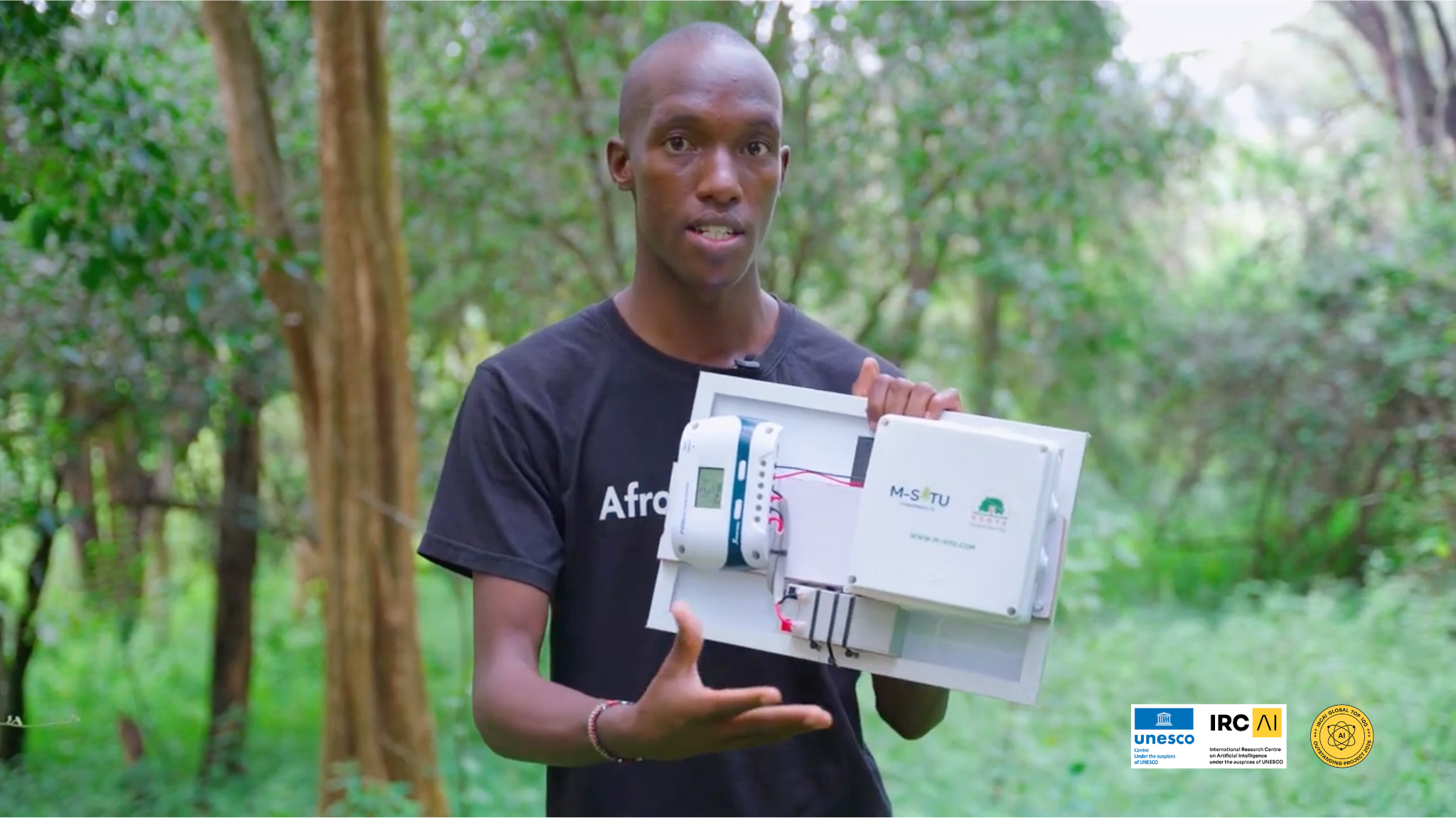
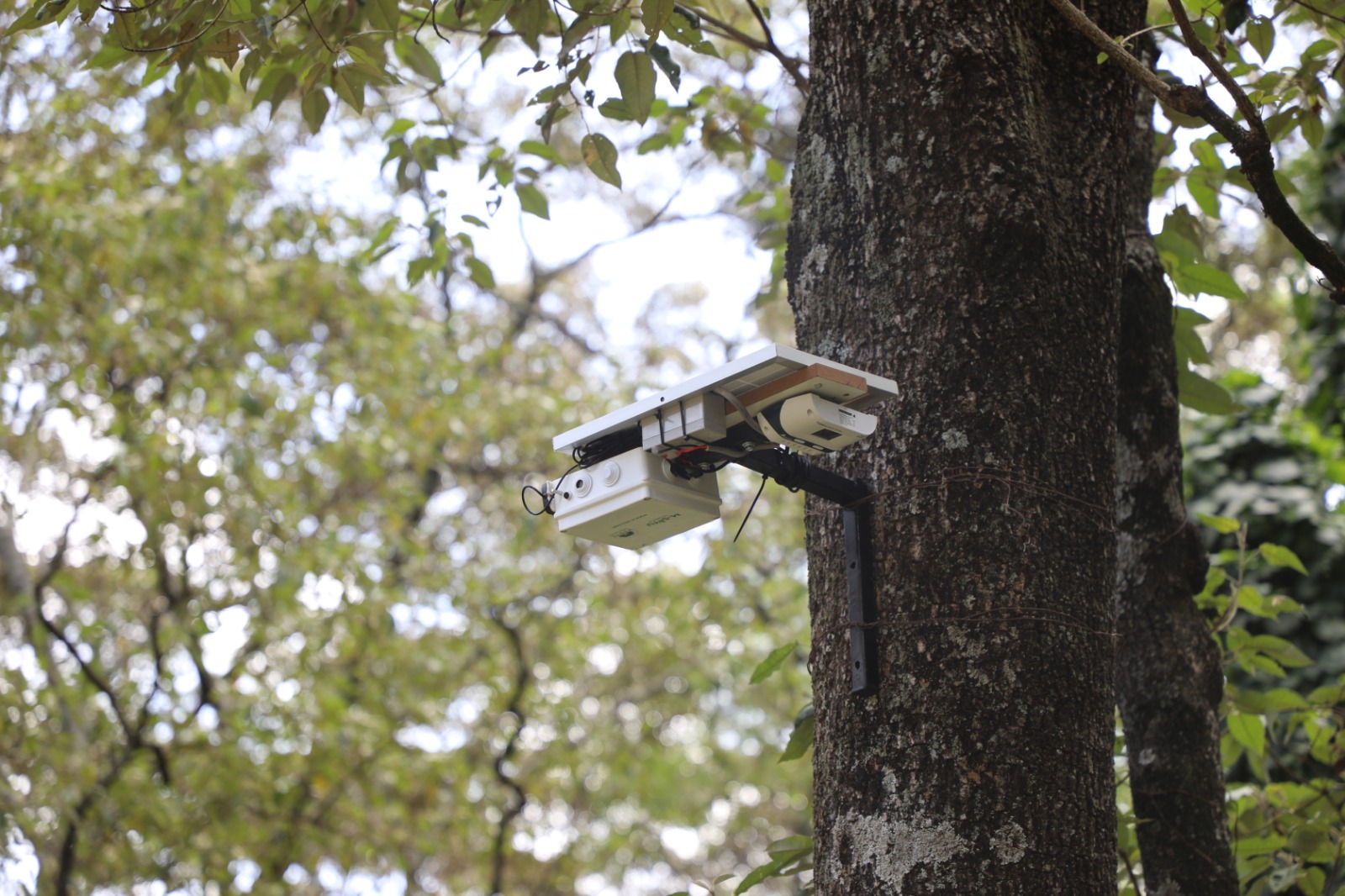
M-Situ deploys a network of solar-powered IoT sensors across protected forest areas, each covering a radius of one to three kilometers. The machine learning algorithms monitor and detect acoustic data, temperature, humidity, and air quality. When the devices detect the signature of a chainsaw, wildfire gases, or charcoal burning, a real-time alert is sent within 10 seconds via SMS or a web dashboard to conservationists and local communities, reducing response times from 6 hours to 15 minutes, which enables a rapid and effective intervention. Unlike satellite or aerial observation systems, M-Situ’s devices can capture data even in dense canopies. Their accuracy is continuously improved with new field data. Beyond alerts, the platform provides historical data analysis and strategic dashboards that empower conservation agencies to plan patrols, allocate resources, and build long-term protection strategies.
24% fewer logging incidents and a blueprint of scale
In their pilot project in the Ngong Forest, one of the most vulnerable deforestation areas in Kenya, M-Situ noted 24% less logging incidents and 85% faster detections than manual patrols compared to the same period the previous year. This demonstrates a tangible impact on the ground for conserving biodiversity and building climate resilience. Beyond the operational metrics, the platform has strengthened conservation at the community level: working with community forest associations around Ngong Forest, M-Situ trains local members to interpret alerts, participate in protection efforts, and take shared ownership of the ecosystems their livelihoods depend on, building a model of conservation that is technically rigorous and genuinely community-rooted.
Protecting forests, protecting the future
By preventing deforestation and reducing wildfire damage, primary drivers of climate change and biodiversity loss, M-Situ directly advances SDG 13 (Climate Action) and SDG 15 (Life on Land). In the Ngong Forest, they target a 20% reduction of deforestation by 2028, a 30% reduction in large wildfires by 2027, and a 15% increase in key wildlife indicator species by 2030. By creating sustainable jobs in forest communities (targeting 100 community roles by 2026), the platform contributes to SDG 8 (Decent Work and Economic Growth), while its multi-stakeholder model spanning government agencies, community organizations, and technology partners embodies SDG 17 (Partnerships for the Goals) in practice.
From Ngong Forest to 200 forests worldwide
Building on the Ngong Forest results, M-Situ’s roadmap moves from current Kenyan deployments to 50 forests across Sub-Saharan Africa by 2027 and more than 200 forests globally from 2027 onwards. Their licensing model is designed to ensure revenue flows directly to local forest communities. Behind this ambition is a team combining AI and machine learning expertise with eight years of field conservation experience in East Africa, supported by a growing partnership network including the Kenya Forest Service, the African Union, the Kenya Community Development Foundation, AfroClimate, and international technology partners. That said, M-Situ is a compelling proof that affordable, community-centred AI can protect some of the world’s most threatened ecosystems.
For more information about M-Situ, visit their website.
KEY FACTS
Project: M-Situ
Description: AI-Powered Forest Watch for Early Detection of Environmental Threats
Organization: M-Situ
Website: m-situ.com
Country: Kenya
Industry: Environmental conservation, biodiversity protection
Technology: IoT sensors, Machine Learning, Cloud-based processing.
SDGs: 8, 9, 13, 15, 17
Reach: Ngong Forest pilot, scaling to 50 forests across Sub-Saharan Africa by 2027 and aiming to expand to over 200 forests globally from 2027 on.
Stage: Deployed, commercially active
IRCAI recognized this project as Outstanding in the Top 100 2025, evaluated for AI integrity, SDG impact, business sustainability, and ethical design.