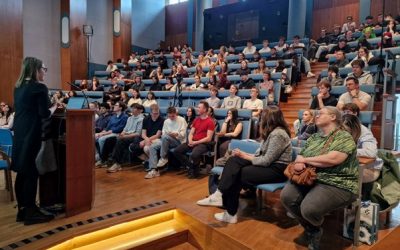
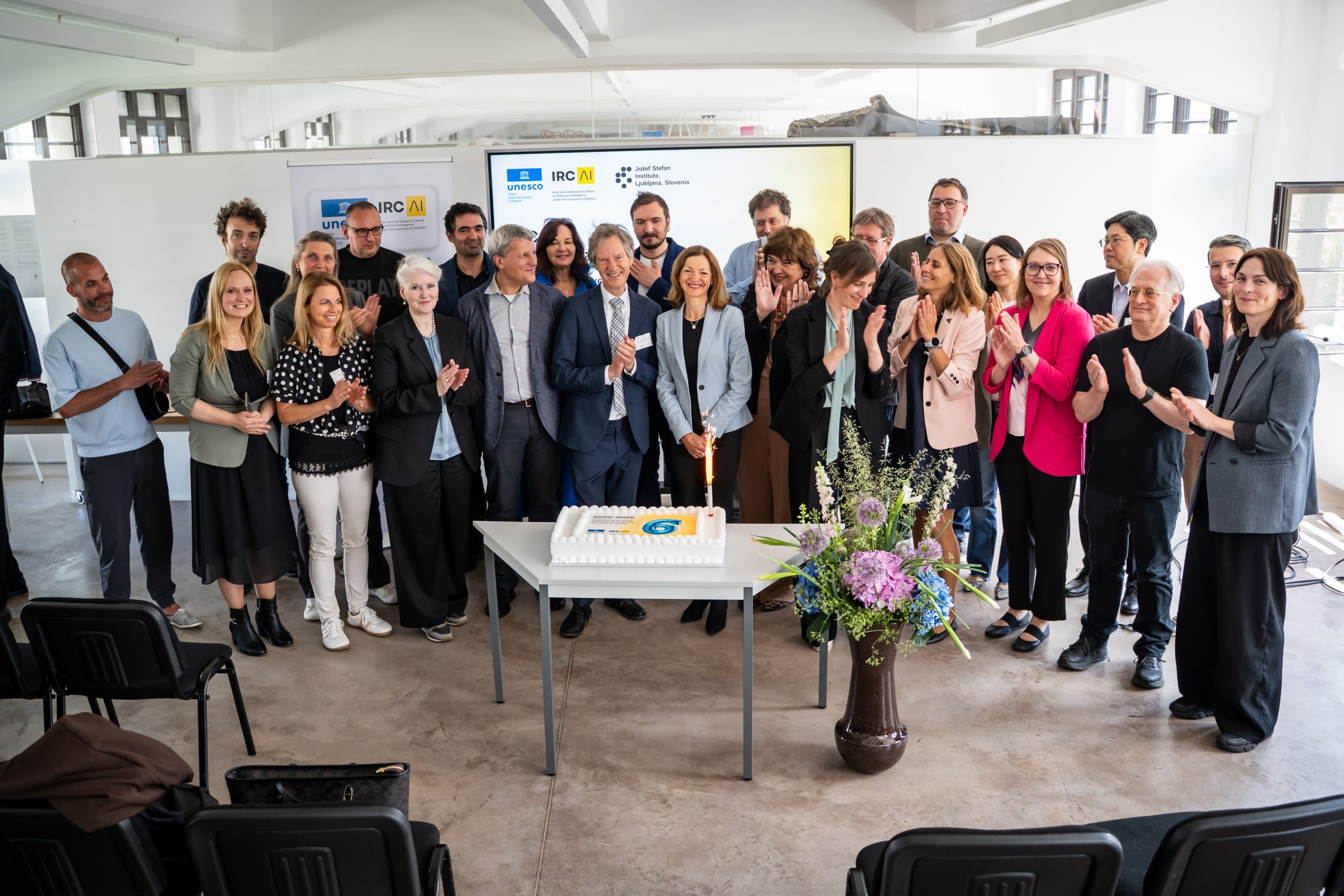
IRCAI celebrates its 6th anniversary together with national and international partners, researchers, policymakers, and invited guests, the two-day programme provided an opportunity to reflect on IRCAI’s achievements, partnerships, strategic priorities, and future role in advancing ethical, inclusive, sustainable, and human-centred artificial intelligence.
The first day of the event was dedicated to the anniversary of the UNESCO Chair on Ethics of Artificial Intelligence and Education and to broader discussions on the future of responsible AI. Speakers highlighted the importance of ensuring that artificial intelligence serves people, supports education, strengthens international cooperation, and remains grounded in ethical values.
Ms Tanja Fajon, Minister of Foreign and European Affairs of the Republic of Slovenia and Deputy Prime Minister of the Republic of Slovenia, highlighted that IRCAI has become far more than a national research initiative. She emphasised that the Centre represents Slovenia’s ability to actively contribute to the future of AI governance, science diplomacy, and international cooperation.
Prof. Dr Maja Zalaznik, President of the Slovenian National Commission for UNESCO, emphasised the importance of the UNESCO Recommendation on the Ethics of Artificial Intelligence and stressed that access to knowledge cannot be taken for granted across the world. She placed humanity, ethics, and long-term commitment at the centre of the discussion, while also thanking the IRCAI team for actively promoting UNESCO values.
Prof. Dr Leon Cizelj, Director of the Jožef Stefan Institute, highlighted the importance of dialogue between science and policymakers and expressed pride that IRCAI represents an important part of the IJS research environment. He also described the extension of IRCAI’s UNESCO status for another eight years as an important international recognition for Slovenia and a valuable model for the development of other technologies.
Mr Mitja Jermol, Deputy Director of IRCAI, presented IRCAI’s key achievements and emphasised that, with its renewed mandate, the Centre is entering a mature phase focused on creating strategic, global, and measurable impact in education, sustainable development, and responsible digital transformation.
Marking the first anniversary of the UNESCO Chair on Ethics of Artificial Intelligence and Education, Prof. Dr Wayne Holmes, IRCAI, and Dr Kyungmee Lee, Seoul National University, stressed that artificial intelligence in education must primarily serve to protect, empower, and support learners and teachers — not replace human thinking, relationships, or pedagogical judgement.
The second day of the event opened with the IRCAI video and a video address by Ms Mariya Gabriel, Assistant Director-General for Communication and Information at UNESCO. The opening was followed by welcome remarks from Ambassador Veronika Stabej, Ministry of Foreign and European Affairs of the Republic of Slovenia; Ms Silvia Viceconte, Head of Digital Sector, DG INTPA, Directorate-General for International Partnerships, European Commission; and Mr Gašper Hrastelj, Slovenian National Commission for UNESCO.
In her address, Ambassador Veronika Stabej emphasised that IRCAI reflects the very best of what Slovenia can contribute internationally: serious expertise, international trust, and a strong belief that technological progress must remain connected to people, education, ethics, and cooperation.
Prof. Dr John Shawe-Taylor, Director of IRCAI, welcomed participants and introduced the Centre’s mission, strategic direction, and future vision. The programme continued with presentations of IRCAI’s six strategic pillars: AI Academy, Science and Development, International Engagement and Policy Work, AI Entrepreneurship and Impact, Infrastructure and Digital Platforms, and Outreach.
The anniversary programme concluded with testimonials, closing reflections, networking, and a celebration cake, marking an important milestone in IRCAI’s continued development as a UNESCO Category 2 Centre.
IRCAI extends its sincere thanks to all speakers, partners, researchers, collaborators, colleagues, and participants who joined the celebration and contributed to the global dialogue on ethical and responsible artificial intelligence for the benefit of society.