Cities bear the responsibility for maintaining vast networks of roads and large infrastructure networks, yet the systems they rely on to do so are often inefficient, costly and resource intensive. Cityrover, a Canadian AI-enabled technology improves operational efficiency and reduces environmental impact on more than 5.5 million kilometers of roads in over 550 cities of all sizes in North America, South America, Europe, Asia, and Australia. In 2022, CityRover was included as a Promising project in the Top 100 AI & SDG index, while in this year’s cohort, given their progress, it was recognized as an Outstanding project. In this article, we take a closer look at what makes CityRover one of the most compelling examples of AI put to work for cities and communities.
Why cities keep falling behind on infrastructure
Municipalities are responsible for thousands of kilometers of infrastructure and public assets, but inspections of deficiencies are often carried out manually, leaving governments with an incomplete picture of conditions across their network. The gaps between surveys take a long time, making small defects become costly repairs, safety hazards unaddressed, while residents bear the consequences. Reactive maintenance is not only slower, but it costs significantly more than early intervention. Yet without continuous visibility into network conditions, proactive action remains for most cities out of reach.
Eyes on the road: AI improves infrastructure monitoring
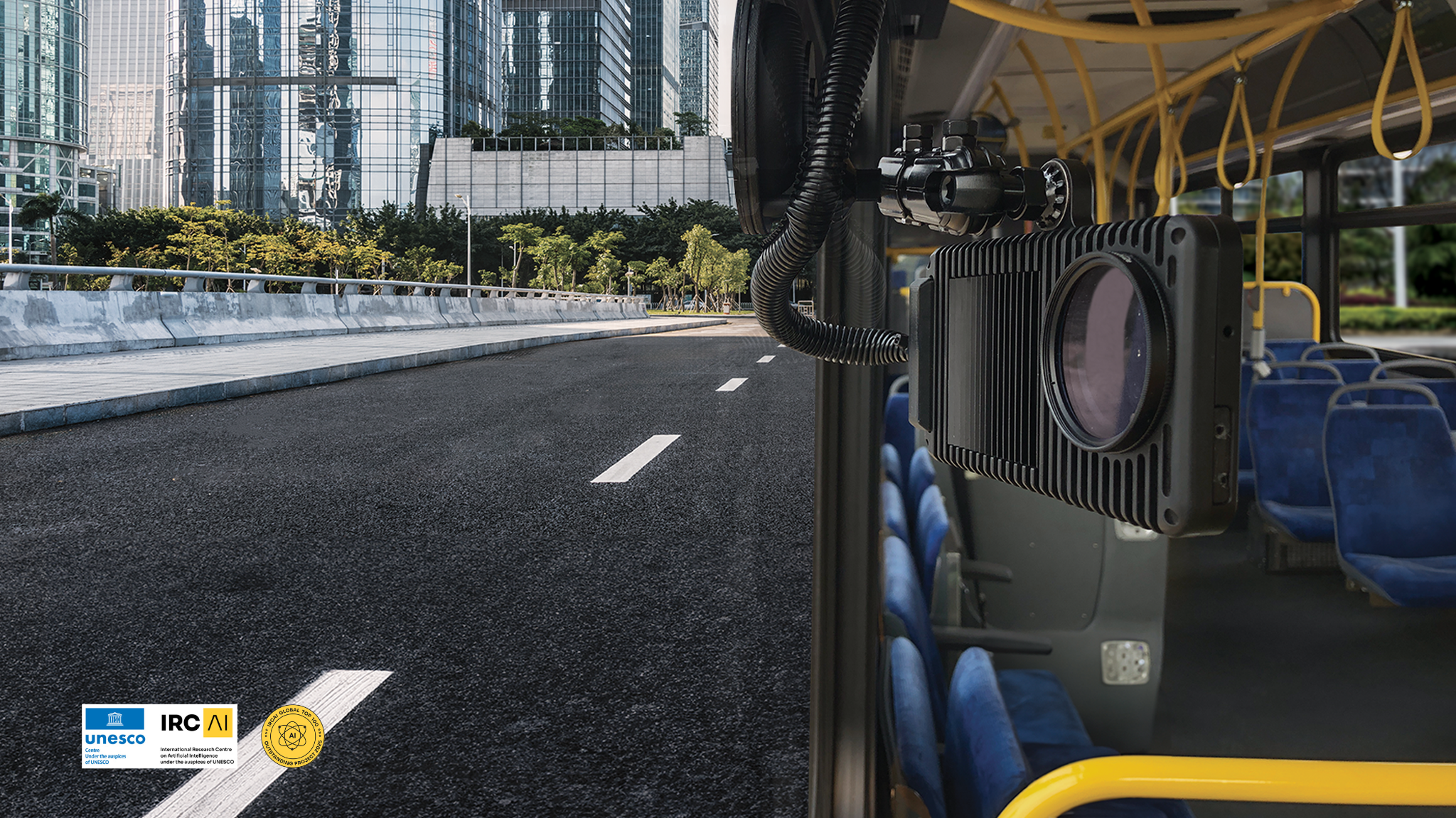
CityRover presents an elegant solution to this challenge. AI-enabled smart cameras are mounted on vehicles already operating in cities, such as public works trucks, service vehicles, transit buses etc. As they drive their daily routes, the technology automatically identifies infrastructure issues such as potholes, debris, cracks, or damaged assets. It collects and analyzes visual data directly on the device, organizing it into intuitive maps and reports that help city operations teams understand conditions across their entire network, without requiring specialist staff or dedicated vehicles. This allows municipalities to monitor infrastructure conditions at scale, improve safety, extend infrastructure life, and deliver better services to residents. By processing data on the device directly, it makes the system work without reliable internet connectivity, which makes it accessible to a wide range of municipalities. It also minimizes cybersecurity exposure and ensures that personal information, including faces and license plates, is automatically redacted before any data leaves the device. The result is a platform that is not only powerful, but trustworthy by design.
From 150 to 550: growing with the cities it serves
The scale of adoption shows the real-world impact: CityRover has been deployed in over 550 cities across 20 countries, supporting better infrastructure services for more than 38 million residents. To date, municipalities using the system have digitized more than 5.5 million kilometers of infrastructure and report significant operational benefits, including reductions in service costs and improved efficiency in maintenance. This allows them not only to allocate resources more effectively but, above all, to improve infrastructure safety and reliability.
Since their participation in the Top 100 2022, CityRover has significantly increased their city deployments from 150 to 550 and added advanced AI capabilities for the municipalities to better serve their residents. They have improved the technology to include more types of issues and the accuracy of the detections. The application now also helps transit authorities to identify transit facility issues.
Paving the way to sustainability: smarter roads for a reduced environmental impact
CityRover’s team has since the beginning aimed to create a scalable urban solution that would provide city authorities not only with data for better infrastructure monitoring but also with intelligence to make informed decisions for reducing ecological impact. With data-driven insights, they can perform precise and timely repairs, reduce vehicle mileage and staff time. This results in reduced waste, material and energy consumption, reduced carbon emissions and maintenance costs. The platform’s objective mapping of asset conditions across every neighbourhood enables municipalities to allocate crews, equipment, and materials precisely where they are needed, translating into hundreds of thousands to millions of dollars in recaptured value. With the use of AI, CityRover is becoming a powerful global platform for reducing environmental impact for cities and supporting sustainable urban governance.
Developed in close collaboration with governments, research institutions, and public sector partners across more than 20 countries, CityRover continues to evolve through real-world operational feedback, embodying the kind of open, accountable, and inclusive approach to AI development that the transition to sustainable cities will ultimately depend on.
For more information about CityRover, visit their website or connect with the team on LinkedIn.
KEY FACTS
Project: CityRover AI
Website: cityrover.com
Description: AI-powered vehicle system that automates municipal infrastructure data collection, improving operational efficiency and reducing environmental impact for cities.
Organization: Visual Defence
Country: Canada
Technology: Edge AI, Computer Vision, LLM Integration
SDGs: 9, 11, 12, 13
Reach: 550+ cities, 20+ countries, 38M+ residents
Stage: Deployed, commercially active
IRCAI recognized this project as Outstanding in the Top 100 2025, evaluated for AI integrity, SDG impact, business sustainability, and ethical design.