Oct 24, 2023
Over the next decade, Artificial Intelligence (“AI”) will continue to significantly impact societies. While these scientific and technological advances take place at an extraordinary pace, it is necessary
that we simultaneously stimulate a global and inclusive conversation around their development and governance. It is in this context that Mila and UNESCO joined forces to steer a collective work to identify and understand missing links in AI governance. This publication is a compilation of 18 selected submissions
from a global open call for proposals launched in 2021. The works featured cross disciplinary and geographical boundaries, and include the perspectives of academics, civil society representatives, and innovators to help shift the conversation on AI from what we do know and foresee to what we do not, the missing links.
Oct 12, 2023
An introduction to a forthcoming Gender bias in Artificial Intelligence report coming out on March 8, 2024. As we stand on the precipice of a technological revolution driven by Artificial Intelligence (AI), it is imperative to ensure that this future is shaped equitably, representing all genders. With this essay we are excited to announce our forthcoming in-depth report on Gender and Artificial Intelligence in a partnership between IRCAI and UNESCO, set for release on March 8, 2024. As we prepare for this milestone event, we extend an invitation to experts, scholars, and all interested stakeholders to join us in our research.
Sep 27, 2023
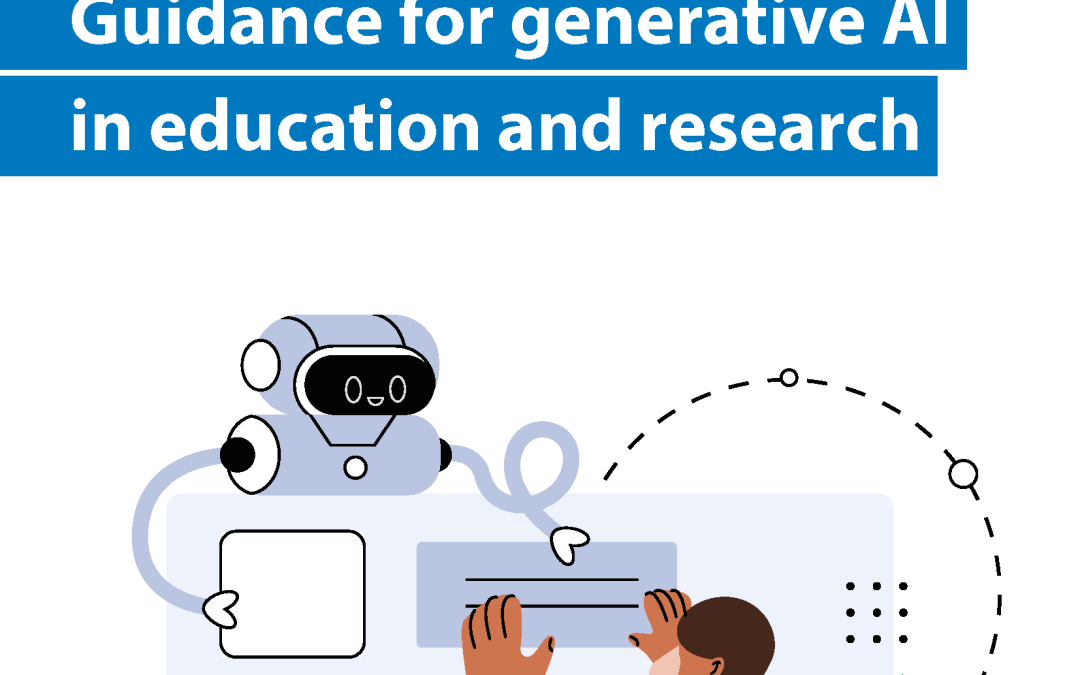
UNESCO’s first global guidance on GenAI in education aims to support
countries to implement immediate actions, plan long-term policies and develop human capacity to ensure a human-centred vision of these new technologies. The guidance presents an assessment of potential risks GenAI could pose to core humanistic values that promote human agency, inclusion, equity, gender equality, linguistic and cultural diversities, as well as plural opinions and expressions. The document has been developed with the contribution of
Wayne Holmes, Associate Professor at University College London, who co-drafted the publication and is member of IRCAI’s scientific journal editorial board.
Jul 17, 2023
The UNESCO commissions of Germany, the Netherlands and Slovenia with the support of IRCAI have jointly published a brochure on the UNESCO recommendation on the ethics of artificial intelligence. It summarizes the most important content in a compact manner and presents the central demands from the areas of health, culture, the environment, gender equality as well as education and research. The recommendation with its diverse topics is not only relevant for political experts, but it offers one for various areas of application of the ethical framework and thus serves as an orientation for dealing with AI in general. The brochure is available for the wider public in a number of formats including the original Adobe InDesign file that allows translations to be inserted and format pages, resulting in new versions of the brochure. Therefore, we strongly encourage all UNESCO Commissions from across all UNESCO regions Africa, Arab States, Asia and the Pacific, Europe and North America, Latin America and the Caribbean to use the text in the basic files and translate the content into their own languages, including using the graphic file to setup their own designs of the brochure.

Jul 6, 2023
These guidelines follow up on the UNESCO Recommendation on the Ethics of Artificial Intelligence, which, among other topics, includes a call for open data for AI. These guidelines will also play a crucial role in supporting the UNESCO Recommendations on Open Scienceby facilitating data sharing, enhancing reproducibility and transparency, promoting data interoperability and standards, supporting data preservation and long-term access.