
KINGSTON, Jamaica — The third School of Digital Transformation and Innovation in the Caribbean (SoDTIC 2026), held from 29 June to 2 July 2026 at The University of the West Indies, Mona Campus, brought together decision-makers to strengthen regional capacity in digital sovereignty, artificial intelligence, digital public infrastructure and meaningful connectivity.
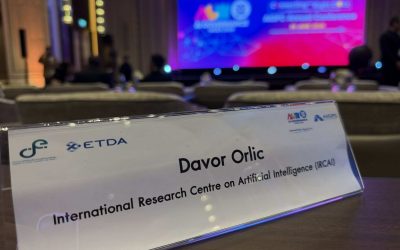
The AI sovereignty component was supported through the EU–Latin America and Caribbean Digital Alliance, part of the European Union’s Global Gateway initiative. IRCAI leads the Alliance’s artificial intelligence component, advancing cooperation with Latin American and Caribbean partners on trustworthy AI, policy development and capacity building.
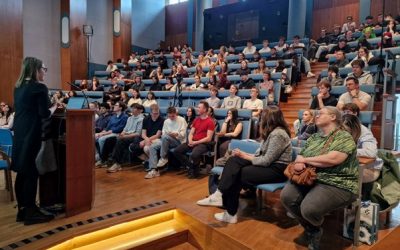
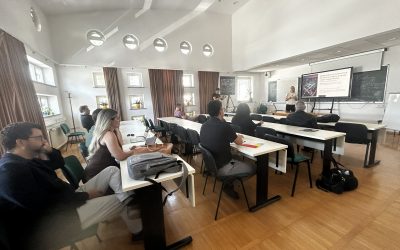
Dr. Polona Pičman Štefančič, representing Slovenia’s Ministry of the Interior and Public Administration, shared Slovenian and European experience in building a sovereign, trustworthy and inclusive AI ecosystem. Her contribution combined a lecture with an interactive workshop on the foundations of national AI policy, institutional responsibilities, regional cooperation and shared digital infrastructure.
Working in groups, participants considered a practical question: what should remain under national control, what becomes stronger when shared regionally, and what can be procured internationally under clear safeguards? The exercise moved the discussion beyond a binary choice between technological self-sufficiency and dependence.
The workshop outputs point to a layered model of AI agency. High-consequence assets and decisions—including critical and personal data, public authority, national security, culture, identity and rights—require national control and accountability. Regional cooperation can create scale through shared standards, procurement tools, expert capacity, training, data arrangements and evaluation services. Cloud, compute, software, AI tools and specialist support can be sourced internationally when cybersecurity, auditability, portability, human oversight, continuity and exit provisions are built into procurement.
An independent synthesis of the workshop by Dr Pičman Štefančič describes this approach as a shift from sovereignty to effective agency: the ability to make legitimate choices, protect public interests, negotiate with suppliers, operate essential systems and change course. The report uses Slovenia’s National Strategy for Artificial Intelligence to 2030 as an illustrative comparator—not a blueprint—showing how strategic goals can be connected to governance, infrastructure, skills, action plans and measurable indicators.
The comparison also highlights a distinctive Caribbean contribution to the global AI sovereignty debate: for small states, regional integration is not a limitation on sovereignty but a practical source of capability, resilience and bargaining power.
The workshop findings suggest several near-term priorities: aligning regional governance initiatives; developing a common public-sector AI procurement standard; creating a regional pool of expertise and shared services; assessing infrastructure options before major investment; testing public-value AI use cases; and establishing a regional monitoring and learning mechanism.
SoDTIC 2026 was co-organised by the United Nations Economic Commission for Latin America and the Caribbean (ECLAC), CAF—Development Bank of Latin America and the Caribbean, Cetic.br/NIC.br, the Caribbean Telecommunications Union, The University of the West Indies and other regional and international partners.