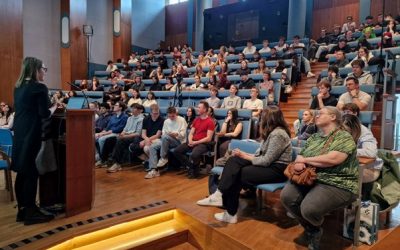
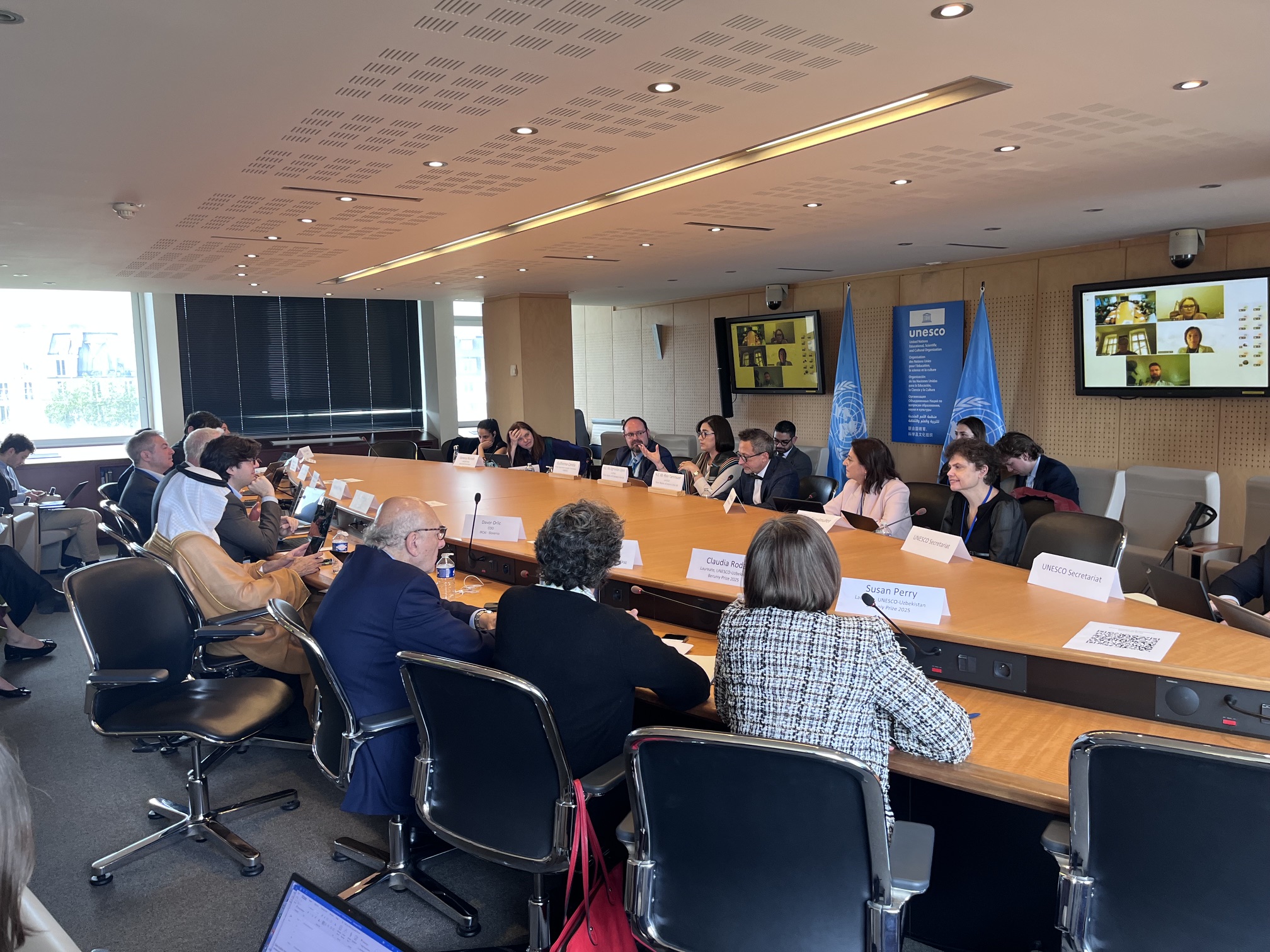
On Friday, 17 April 2026, UNESCO convened a High-level Stakeholder Consultation on the Global Dialogue on AI Governance at its Headquarters in Paris, in a hybrid format bringing together representatives from governments, international organizations, academia, civil society, and the private sector. The consultation formed part of the preparatory process for the inaugural UN Global Dialogue on AI Governance, to be held in Geneva on 6–7 July 2026, and was designed to support an open, inclusive, and action-oriented exchange on the future of global AI governance.
The Global Dialogue, established pursuant to UN General Assembly Resolution 79/325, is intended as a multistakeholder platform to discuss international cooperation on AI governance, share lessons learned, and identify practical pathways for safe, inclusive, human-centric and rights-based AI. It is co-chaired by H.E. Ms. Egriselda López, Permanent Representative of El Salvador to the United Nations, and H.E. Mr. Rein Tammsaar, Permanent Representative of Estonia to the United Nations. The Secretariat is composed of UNESCO, ITU, the Executive Office of the Secretary-General, and the Office of Digital and Emerging Technologies.
The Paris consultation was held as an informal, invite-only exchange to help shape the content, format and priorities of the Geneva Dialogue. Discussions were structured around four thematic clusters proposed by the co-chairs:
(1) AI opportunities and implications across social, cultural and economic dimensions;
(2) bridging AI divides through capacity-building, access and digital foundations;
(3) safe, secure and trustworthy AI through responsible and interoperable approaches; and
(4) human rights, with a focus on transparency, accountability and human oversight.
Across the meeting, participants emphasized the importance of moving from high-level principles to practical implementation, while avoiding duplication with existing initiatives. Several recurring priorities emerged: the need to ensure that global AI governance is genuinely inclusive of developing countries and underrepresented stakeholders; the importance of addressing capacity gaps in compute, talent, infrastructure, evaluation and governance; the value of open models, open data and open-source approaches, with appropriate safeguards; and the need to anchor AI governance in human rights, accountability, and robust oversight. The discussion also highlighted issues such as education and skills, information integrity, multilingualism and cultural diversity, gender equality, children’s rights, environmental and labour impacts, and the importance of making space for practitioners and concrete case studies in Geneva.
A strong message from the consultation was that the Geneva Dialogue should not be limited to abstract debate. Participants called for a process that can generate practical outcomes, surface areas of both convergence and divergence, and establish continuity beyond the July meeting through follow-up tracks, working groups, or a possible platform for action between the 2026 Geneva and 2027 New York editions of the Dialogue. The co-chairs also underlined the importance of additional consultations, written submissions, and efforts to mobilize resources so that participation is as broad and representative as possible.
For IRCAI, participation in this consultation was especially relevant. The discussion aligned closely with IRCAI’s mission to advance inclusive, capacity-building-oriented, and globally relevant AI governance, particularly through support for research ecosystems, practical international cooperation, and stronger participation from the Global South. The consultation reaffirmed that institutions such as IRCAI can play an important role in helping translate multilateral dialogue into operational initiatives, including support for AI talent development, ecosystem partnerships, and practical mechanisms that connect governance discussions to implementation on the ground.